


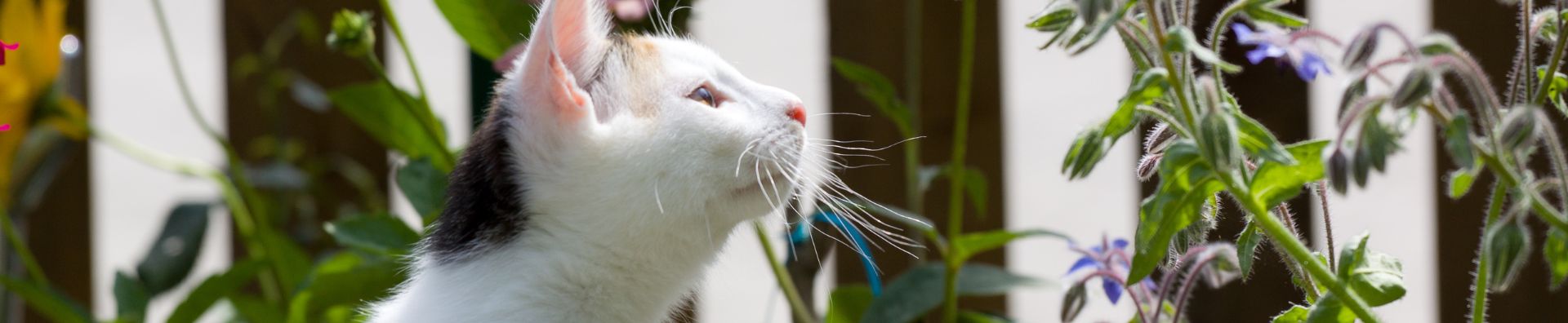
21 Apr Cat Friendly Garden Plants

Now that spring is here, the days are getting longer and the weather is warming up, many of us are itching to get back out into the garden and spruce things up (at least in the 4Paws office we are). If you share your outdoor space with a cat, it’s worth planning your garden planting with them in mind. Some common garden favourites can be toxic to cats, while others are perfectly safe.
Our cat friendly garden plants guide runs through cat safe plants to consider, plus the ones cat owners should avoid.
Why cat‑safe planting matters
Like us humans, cats are naturally curious. They explore with their paws, noses and – sometimes – their mouths. Even if your cat doesn’t usually eat plants, they may:
- Chew leaves or stems while playing
- Brush past plants and then groom themselves
- Dig in borders and beds where bulbs or roots are exposed
While many plants are simply mildly irritating, others can cause serious illness if eaten. Planning a cat‑safe garden helps reduce the risk of an emergency vet visit.
What cat‑friendly plants should I consider?
Below are some popular, generally recognised cat‑safe choices for UK gardens. Even with non‑toxic plants, keep an eye on your cat – large amounts of any plant material can upset their stomach.
-
Cat sensory plants
- Catnip
- Catmint
- Cat grass
-
Herbs that are generally safe for cats
- Rosemary
- Thyme
- Basil
- Parsley
-
Cat‑friendly flowers and shrubs
- Roses
- Sunflowers
- Snapdragons
- Camellias
- Gerbera daisies
What plants should cat owners avoid?
Some plants can cause anything from mild irritation to severe poisoning in cats. This is not a complete list, but it covers several common spring choices that are best avoided if you have feline family members.
-
Highly dangerous for cats
Lilies are extremely toxic to cats. Even small exposures – pollen on the fur, water from a vase, or a nibble of leaf – can cause kidney failure. Avoid growing lilies in gardens that cats use and be cautious with cut flowers indoors too.
-
Bulbs to treat with caution
Many popular spring bulbs are not cat‑friendly, especially if chewed or dug up:
- Daffodils – Bulbs, flowers and leaves can all be toxic.
- Tulips – Bulbs are the most dangerous part, but all parts can cause problems.
- Hyacinths – Another bulb to avoid in cat‑accessible beds.
- Autumn crocus – Very toxic; do not plant where cats have access.
If you already have these in your garden, try to keep cats away from recently planted or disturbed areas where bulbs may be exposed.
-
Other garden plants to be wary of
- Foxgloves – Every part of the plant is poisonous.
- Lily of the valley – Pretty but toxic if eaten.
- Yew – Extremely poisonous; avoid as hedging in cat‑accessible areas.
- Azaleas and rhododendrons – Can cause serious illness in pets.
- Cyclamen – The tubers in particular are toxic.
If you’re ever unsure about a plant, check a trusted source such as the RHS, Gardeners’ World or pet charity or veterinary resource before planting it.
Simple design tips for a cat‑friendly garden
As you head out this spring to tidy beds and choose new plants, a few small design decisions can make your garden more comfortable for your cat:
- Create safe lounging spots
Leave sunny, sheltered areas with soft planting or grass where your cat can relax. - Use raised beds and pots for riskier plants
If you can’t part with certain plants that may be less pet‑friendly, keep them out of reach in raised containers on patios or balconies, away from where your cat spends most of their time. - Offer attractive alternatives
Plant catnip, catmint and cat grass near the areas your cat already favours, to draw them away from more delicate or risky plants. - Avoid chemicals where possible
Slug pellets, weedkillers and some fertilisers can be harmful to pets. Look for pet‑safe options and always follow label instructions carefully.
Creating a garden for your cat
Spring is the perfect time to rethink your planting and create a garden that both you and your cat can enjoy safely. By choosing cat‑friendly plants and avoiding the more dangerous species, you’ll be able to relax while your feline friend explores, snoozes and ‘helps’ with the gardening.
If your cat ever seems unwell and you suspect they’ve eaten part of a plant, contact your vet straight away and, if you can, take a photo or sample of the plant with you.